Fixing the Broken Property Search Experience
5 min read
Product design, User experience, Search and discovery, Data-led products, Prototyping, Vibe-coding
Property search has access to huge amounts of data, but very little of it is used in ways that actually help people decide where to live. We create a prototype to fix it.
Better products start by fixing real frustrations.
I’ve been searching for a new house recently. We’re planning to move out of our current area and widened the search to a few different counties. What became obvious very quickly was how frustrating the experience still is.
Thousands of listings. Endless scrolling. Filters that barely help.
Despite years of product innovation across other sectors, property search still feels stuck.
What’s not working
A few things stood out almost immediately:
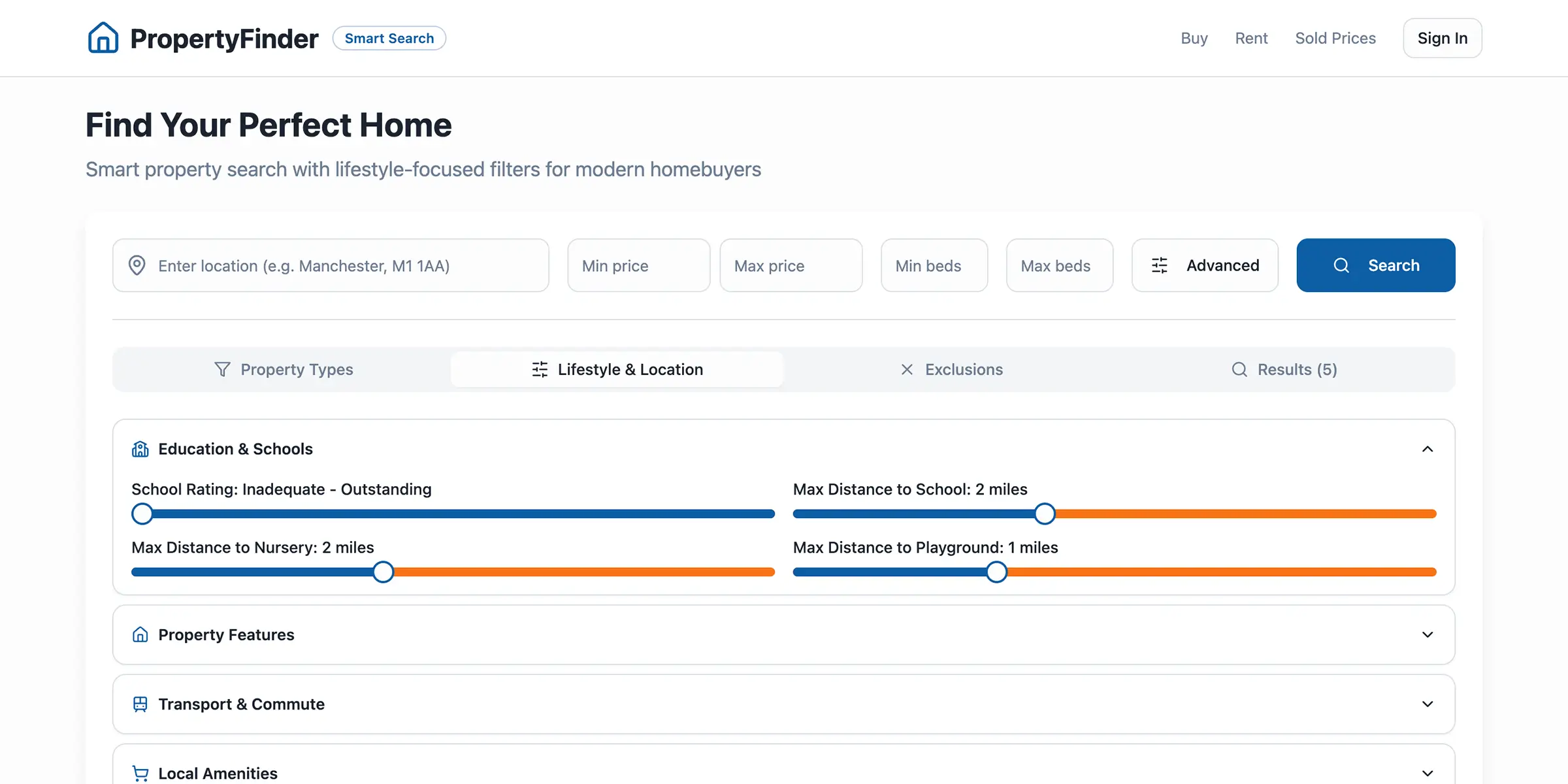
No meaningful filters for things that actually affect day-to-day life, like school quality, broadband speed, commute time, garden size, or storage
No explanation for why irrelevant listings keep appearing
A reliance on manual checking to understand whether a property is even viable
The frustrating part is that most of this data already exists. It’s just not being surfaced or connected in a useful way.
The result is a slow, repetitive experience that puts all the effort on the user.
A quick rebuild
Around the same time, a client asked us to test Lovable, a rapid prototyping tool. We used it as an excuse to explore what a smarter version of property search could look like.
This wasn’t a product, and it wasn’t designed to be polished. It was a functional prototype, built in less than a day, with no design work involved.
The goal was simple: reduce friction and surface what actually matters.
What we changed
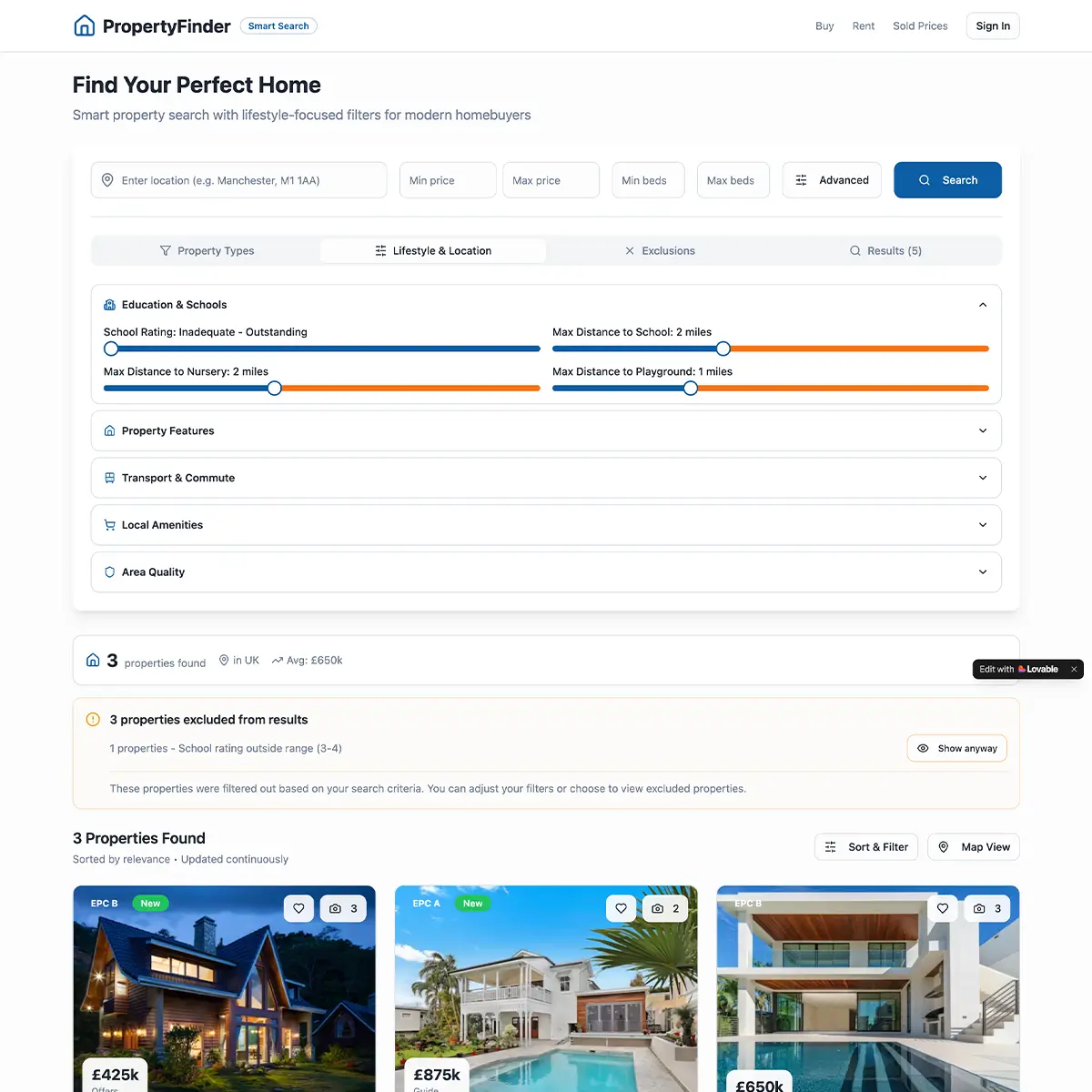
The prototype focused on a few practical improvements:
Clear onboarding to understand priorities up front
Proper multi-select filters instead of rigid single-choice logic
Filters for things like Ofsted ratings, commute time, and local amenities
Results tagged with useful information such as EPC, broadband quality, and storage
Simple icons to surface key features at a glance
Nothing complex. Just better use of existing data and clearer logic.
Why this matters
This is a pattern we see all the time.
People aren’t asking for more features. They’re asking for less effort, better defaults, and clearer signals.
At Diverge, this is the kind of work we do every day. Start with a real frustration, break it down into its underlying problems, and rebuild the experience so it works the way people actually think.